Academy
How to Patent an App Idea (What Actually Gets Protected)
Wondering how to patent an app idea? Here's what US patent law really protects, how the Alice test works, and better ways to guard your app.
By Patent77 Team · 7 min read · published 2026-07-23
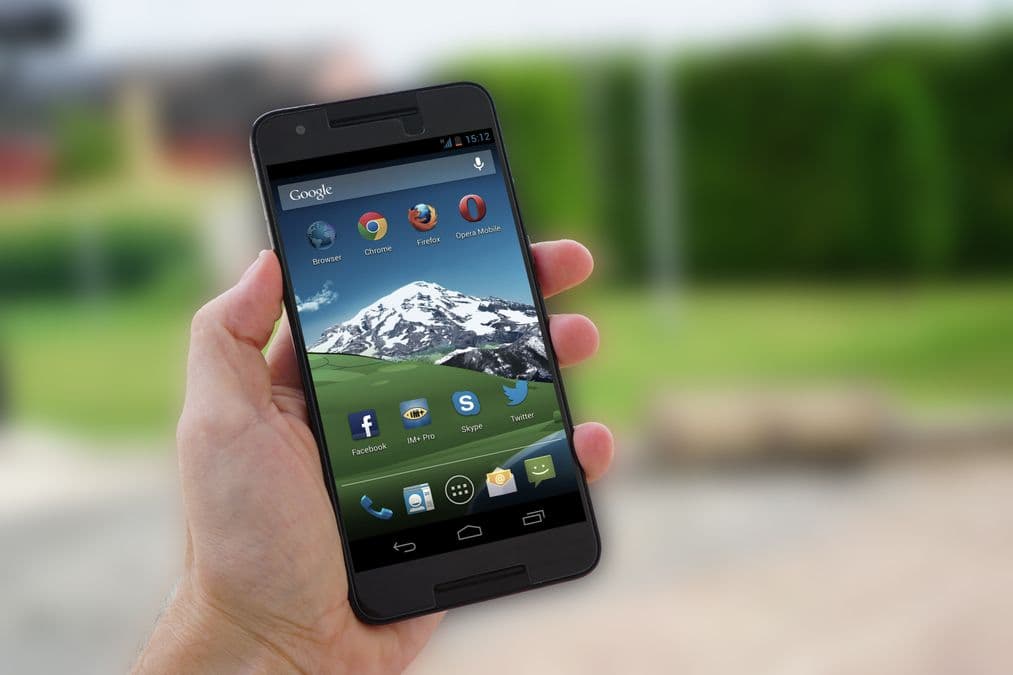
You've built something you think is genuinely new. Naturally, you want to protect it. So you start searching for how to patent an app idea, and the answer isn't what most founders expect.
Here's the hard truth first. You cannot patent "an app that does X". A business idea, on its own, is not something patent law protects. Under US law (35 U.S.C. §101), abstract ideas are excluded from patent protection, however clever or valuable they are commercially. In 2014, the Supreme Court's decision in Alice Corp v CLS Bank made this much harder to get around. Courts and the US Patent and Trademark Office (USPTO) now reject a lot of software patent applications that are really just an ordinary idea "on a computer".
That's the bad news. The good news is that plenty of software still gets patented, and there's a clear pattern to what makes it through. This guide explains what actually qualifies, how the legal test works, and what to do instead if your idea doesn't fit. If you want the broader picture on patenting any kind of invention, we've also covered how to patent an idea more generally. This one is about software specifically.
What can actually be patented in software
Patent examiners aren't interested in what your app does for the user. They care about how it does it, technically, under the bonnet.
A patentable software invention usually solves a technical problem with a technical solution. Some real examples of the kind of thing that clears the bar:
- A new way of compressing image data that uses less bandwidth than existing methods.
- A specific method for syncing offline changes between devices without conflicts, described in enough technical detail to be implemented from the patent alone.
- A particular way a touchscreen interface reduces input lag or battery drain, backed by a described mechanism, not just "a swipe gesture".
- A novel routing or caching architecture that measurably speeds up a system.
Notice what's missing: "an app that helps freelancers track invoices" or "a marketplace connecting dog walkers with pet owners". Those are business methods. Wrapping them in an app doesn't change that. The invention has to sit in the engineering, not the business model.
This is the single biggest misunderstanding founders have. They think the idea is the valuable, protectable part. In patent law, the idea is usually the least protectable part. The implementation detail is what counts.
If you're not sure whether something similar already exists, it's worth doing a proper patent search before you spend money on a filing. Our own patent search tool is built for exactly this: checking what's already out there before you commit. If you're building this kind of checking into your own product or workflow, our developer docs cover the API.
The Alice test, in plain English
The legal test that decides all of this comes from Alice Corp v CLS Bank (2014). It's a two-step test, and once you see it laid out, it's less mysterious than it sounds.
Step one: is the claim directed to an abstract idea?
Judges ask whether the invention, stripped of computer jargon, is really just a well-known concept: a way of doing business, a mathematical relationship, or a mental process a person could do with pen and paper. "Matching buyers to sellers", "verifying a payment", "showing relevant results" — these are treated as abstract on their own.
Step two: does it add an "inventive concept" that amounts to significantly more?
If step one says yes, it's abstract, the application gets a second chance. Does the patent claim add something beyond the abstract idea itself? Generic computer parts, "a processor", "a database", "a network", don't count. What does count is a specific, non-obvious technical mechanism that improves how the computer or system actually functions.
Put simply: "verify a payment, using a computer" fails. "Verify a payment using this specific cryptographic handshake that solves a known synchronisation problem" has a real shot. The USPTO publishes detailed guidance on exactly how examiners apply this test, which is worth a skim if you're weighing up a filing, see the USPTO's subject matter eligibility guidance.
Signs your app idea might actually be patentable
Before you spend thousands on attorney fees, run your idea through a few honest checks.
Good signs: - You can describe a specific algorithm, data structure, or architecture, not just a feature. - The problem you're solving is technical (speed, storage, accuracy, security, battery life), not purely commercial (matching, pricing, scheduling). - A competent engineer reading your description could build the exact mechanism, and it isn't the obvious way to do it.
Warning signs: - Your pitch starts with "an app that lets users..." and ends with a business outcome. - The "innovation" is really a combination of existing, well-known techniques stacked together. - You can't point to anything genuinely new at a technical level, only new in combination, for your market.
Here's a quick illustration. Imagine a founder who built a habit-tracking app. Millions of people use similar apps already, so "an app for tracking habits" was never going to be patentable, however good the growth numbers looked. But partway through building it, the engineer solved an annoying problem: syncing habit data across a phone and a smartwatch that had both been offline for days, without losing or duplicating entries. That specific conflict-resolution method, worked out in detail, was the part worth asking a patent attorney about. The habit-tracking idea itself never was.
As one patent attorney who works with early-stage software teams put it: "Founders come to us wanting to protect the app. We usually end up protecting one clever piece of engineering buried three layers inside it, and telling them the rest is covered by copyright anyway."
Alternatives that protect most of what you actually care about
Most founders don't need a patent. They need to stop someone from copying their code, using their name, or stealing their unreleased plans. Different tools handle each of those.
Copyright protects your actual source code, text, and design assets automatically, the moment you write them. No filing needed, though registering with the US Copyright Office strengthens your position in a dispute. It stops someone copying your code, but not someone building the same feature from scratch.
Trade secret protection covers your algorithm for as long as you keep it confidential. No filing, no cost, no expiry date, but the protection disappears the moment the secret gets out, whether through a leaked API response or a decompiled app.
Trademark protects your app's name, logo, and brand, not the underlying idea or code. If a rival app functions identically but you own the name people search for, you still keep your customers.
First-mover speed isn't a legal protection, but for most consumer apps it matters more than anything else here. By the time a copycat has reverse-engineered your app, you should already have the users and the reviews. Speed is the moat most indie apps actually rely on.
If patents genuinely aren't the right fit for your situation, it's worth reading more on how to protect an invention without a patent before deciding.
| Protection type | Protects | Typical cost | How long | Best for a software startup |
|---|---|---|---|---|
| Patent | A specific technical invention | £8,000-£25,000+ per country, plus attorney fees | Up to 20 years | A genuine technical breakthrough, enterprise sales |
| Copyright | Actual code, text, design assets | Free (automatic); registration is low-cost | Life of author + 70 years | Every software project, by default |
| Trade secret | Algorithms and processes kept confidential | Free (just don't disclose) | Indefinite, until disclosed | Backend logic no one else can see |
| Trademark | Brand name and logo | A few hundred pounds per class/region | 10 years, renewable | Any app with a name worth defending |
When a software patent is genuinely worth pursuing
Patents aren't pointless for software, they're just narrower than most founders assume. Consider one seriously if:
- You have a deep technical moat. Your algorithm gives you a measurable, defensible performance edge that took real engineering effort to reach.
- You're selling into enterprise or B2B markets. Procurement teams sometimes ask about IP directly, and a patent can be a credibility signal, or even a deal requirement.
- Your product is hardware-adjacent. Software controlling a physical device or sensor often clears the Alice test more easily than software alone.
- You're raising a round where investors expect defensible IP, common in deep-tech or medtech, less common in consumer apps.
If none of those apply, that's not a failure. Most successful app businesses never file a single patent. They win on execution, on the product, and on getting there first.
Key takeaways
- You can't patent a business idea, a feature list, or "an app for X". You can patent a specific technical improvement, such as a new compression method or a novel offline-sync technique.
- The Alice test asks two questions: is your claim aimed at an abstract idea, and if so, does it add something significantly more than routine computer use?
- Copyright protects your actual code automatically, the moment you write it. No filing needed.
- For most consumer apps, speed to market beats any patent. Save patents for genuine technical moats or B2B deals where buyers expect them.
This article is general information for founders, not legal advice. Patent eligibility is decided case by case, and rules vary by country. If you think you have a patentable invention, speak to a qualified patent attorney before filing anything.
Sources and further reading
Common questions
Can you patent an app idea?
Not the idea itself. You can potentially patent a specific technical mechanism inside the app, such as a novel algorithm, if it solves a technical problem in a technical way and isn't obvious. The business concept behind the app is never patentable on its own.
What is the Alice test for software patents?
The two-step legal test from Alice Corp v CLS Bank (2014). Step one asks if a claim is aimed at an abstract idea. Step two, if so, asks whether it adds an inventive concept amounting to significantly more than that idea implemented on a generic computer. Fail both, and it isn't eligible.
Is my code protected by copyright automatically?
Yes. Copyright applies the moment you write original code, no registration required. It stops others copying your literal code but doesn't stop them building similar functionality independently.
Do I need a patent before pitching my app idea to investors?
Almost never, for a typical consumer app. Investors fund teams and traction far more than patents. Use an NDA sparingly (many won't sign one) and focus on demonstrating demand and execution instead.
Now run it on your invention
Patent77 executes this method against the live record — three free searches a month, every reference cited to its source.
Related posts
Patent77 searches the public patent record and organizes what it finds. It is not legal advice, and no search — automated or professional — can guarantee that all relevant prior art has been found. Every reference links to its source document so you can verify it yourself, and filing decisions should be made with a registered patent attorney or agent.